← IPA

IPA Vowels

Compare minimal pairs side by side: the words differ by one vowel sound. Read the example words across each row in matching order.

Open the interactive IPA articulation lab →

Seat – sit

All pairs ↑

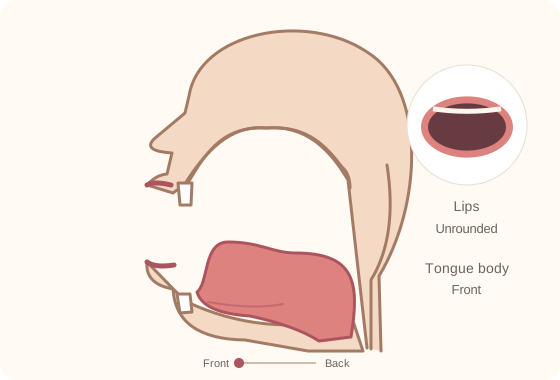
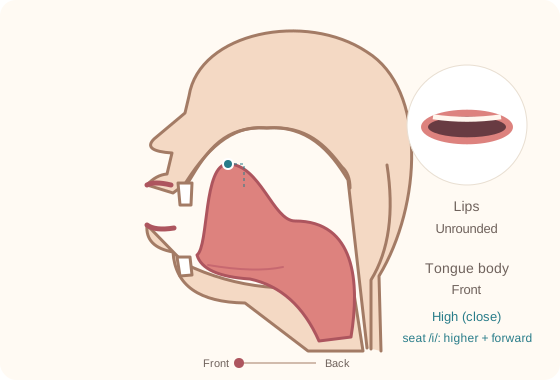
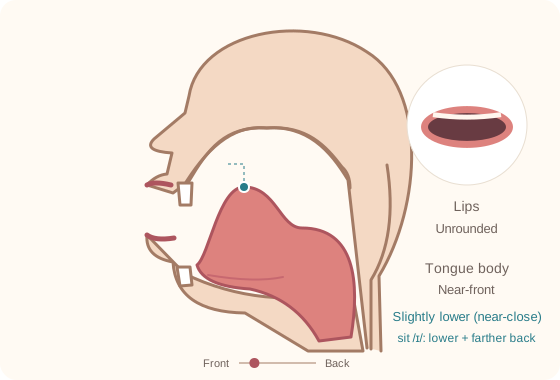
Compare the higher, front tongue in /i/ with the slightly lower, near-front tongue in /ɪ/.
/i/ as in seat

Mouth diagram for /i/: Front of the tongue high, teeth slightly apart, lips gently spread.
  • seat
  • sheep
  • leak

/ɪ/ as in sit

Mouth diagram for /ɪ/: Tongue a little lower and farther back than see, with relaxed lips.
  • sit
  • ship
  • lick

Bed – bad

All pairs ↑

Keep the tongue forward; open the jaw and lower the tongue for /æ/.
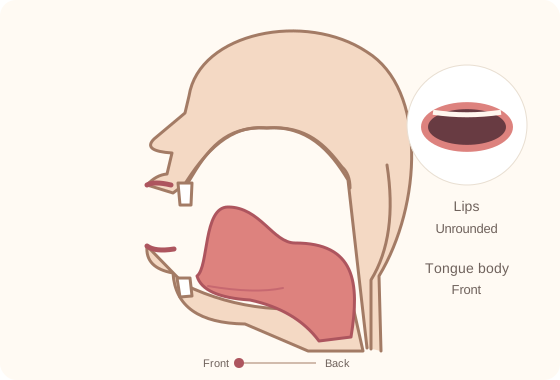
/ɛ/ as in bed

Mouth diagram for /ɛ/: Tongue at the front, below the see vowel, with relaxed unrounded lips.
  • bed
  • pen
  • men

/æ/ as in bad

Mouth diagram for /æ/: Open jaw, unrounded lips, tongue low and forward.
  • bad
  • pan
  • man

Pool – pull

All pairs ↑

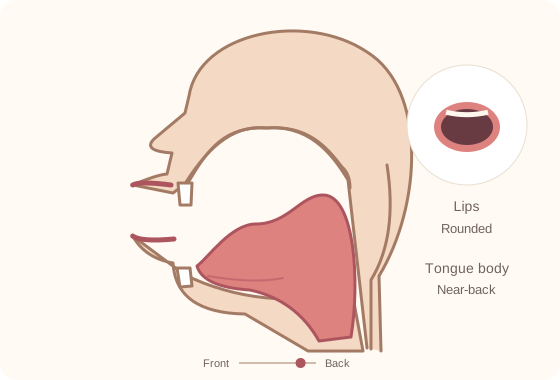
Both have rounded lips. Compare tongue height and how tightly the lips round.
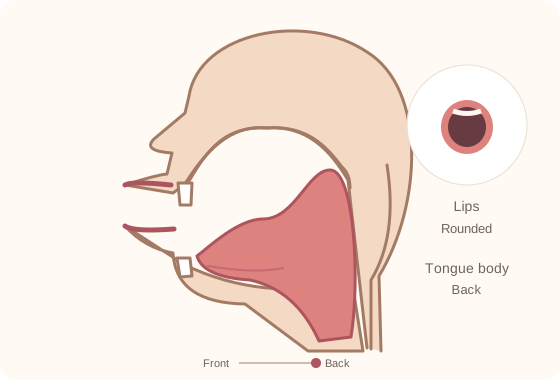
/u/ as in pool

Mouth diagram for /u/: Tongue raised toward the back, with rounded lips and a small opening.
  • pool
  • fool
  • Luke

/ʊ/ as in pull

Mouth diagram for /ʊ/: Tongue raised toward the back, lower than blue, with loosely rounded lips.
  • pull
  • full
  • look

Cut – cot

All pairs ↑

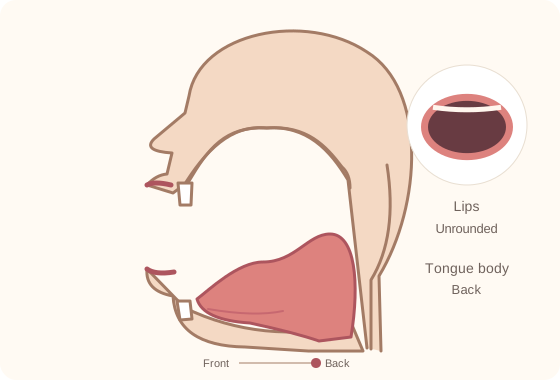
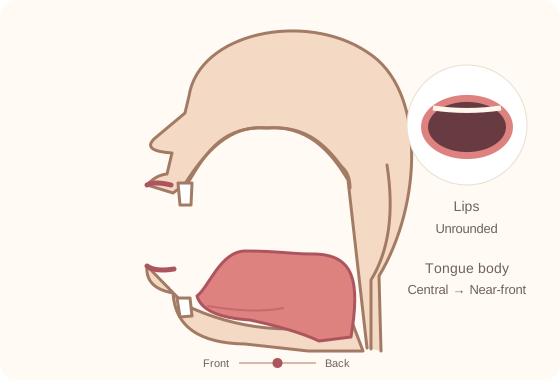
Compare the central tongue in /ʌ/ with the lower, back tongue in /ɑ/.
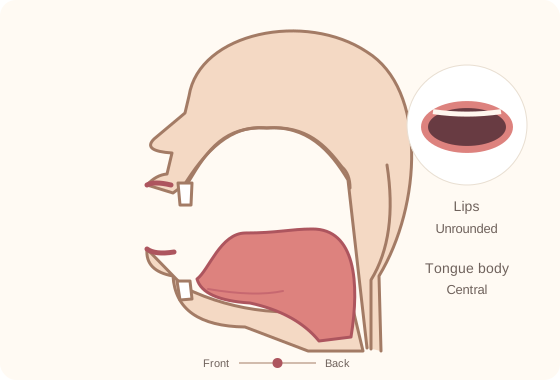
/ʌ/ as in cut

Mouth diagram for /ʌ/: Tongue low and central, with relaxed unrounded lips.
  • cut
  • hut
  • luck

/ɑ/ as in cot

Mouth diagram for /ɑ/: Open jaw, unrounded lips, tongue low toward the back.
  • cot
  • hot
  • lock

Late – light

All pairs ↑

Compare the starting tongue height, then follow each glide toward /ɪ/.
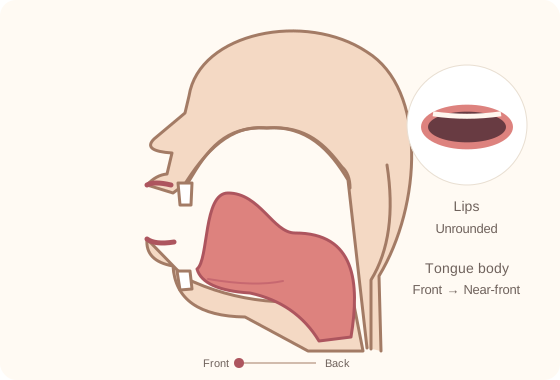
/eɪ/ as in late

Mouth diagram for /eɪ/: Tongue moves higher at the front as the jaw closes slightly; lips stay unrounded.
  • late
  • fail
  • mate

/aɪ/ as in light

Mouth diagram for /aɪ/: Jaw starts open, then closes as the tongue moves higher toward the front.
  • light
  • file
  • might

Know – now

All pairs ↑

Compare the rounded start of /oʊ/ with the open start of /aʊ/.
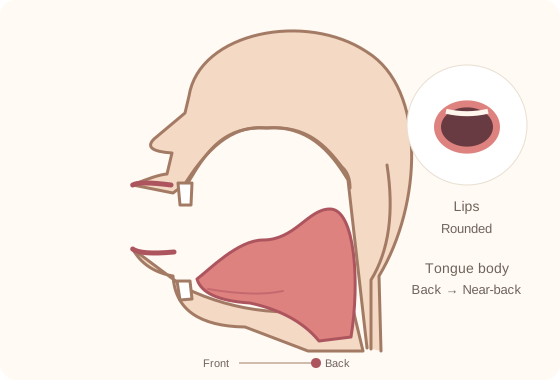
/oʊ/ as in know

Mouth diagram for /oʊ/: Tongue moves higher toward the back while rounded lips narrow.
  • know
  • hoe
  • boat

/aʊ/ as in now

Mouth diagram for /aʊ/: Jaw starts open, then narrows as the tongue rises toward the back and the lips round.
  • now
  • how
  • bout

Tie – toy

All pairs ↑

Compare the open, unrounded start of /aɪ/ with the rounded back start of /ɔɪ/.
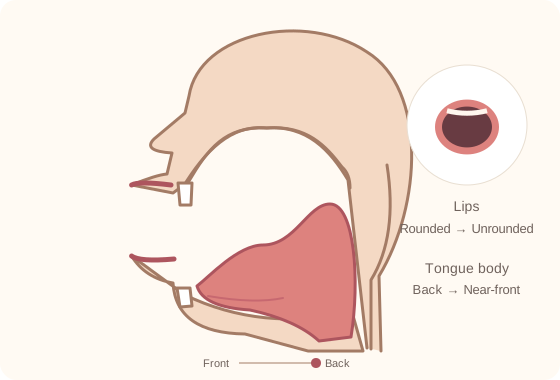
/aɪ/ as in tie

Mouth diagram for /aɪ/: Jaw starts open, then closes as the tongue moves higher toward the front.
  • tie
  • buy

/ɔɪ/ as in toy

Mouth diagram for /ɔɪ/: Tongue moves from the back toward a higher front position as lips unround.
  • toy
  • boy

Cot – caught

All pairs ↑

For speakers who distinguish these vowels, compare unrounded /ɑ/ with rounded /ɔ/. Many American speakers pronounce these pairs alike.
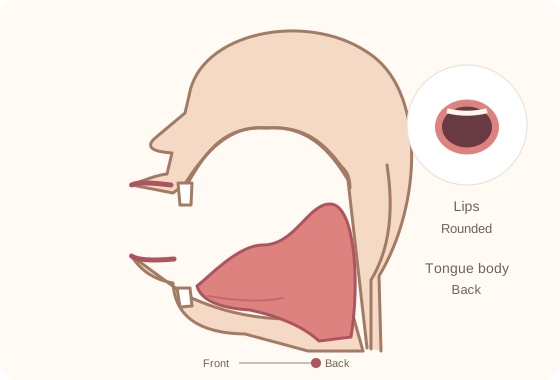
/ɑ/ as in cot

Mouth diagram for /ɑ/: Open jaw, unrounded lips, tongue low toward the back.
  • cot
  • Don
  • stock

/ɔ/ as in caught

Mouth diagram for /ɔ/: Tongue low toward the back, with an open jaw and rounded lips.
  • caught
  • dawn
  • stalk

Other vowels

All pairs ↑

Schwa and R-colored vowels: explore these separately. /ɝ/ and /ɚ/ differ in stress and share the illustrated tongue shape.
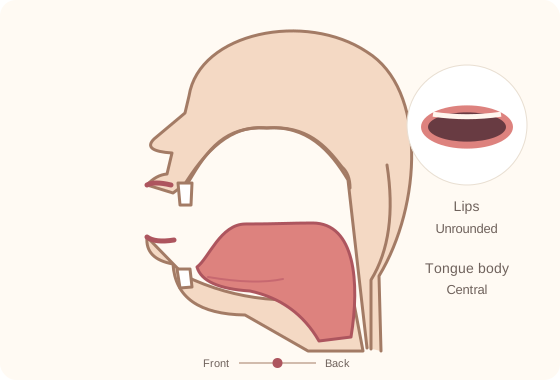
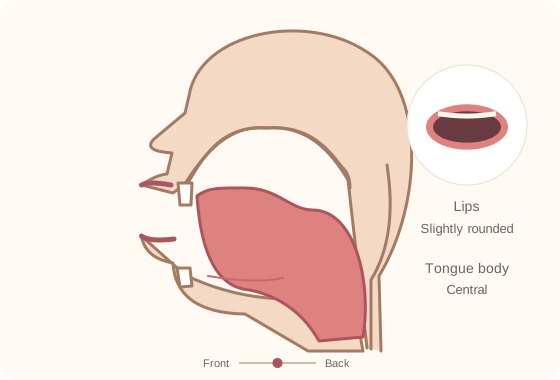
/ə/ as in about

Mouth diagram for /ə/: Tongue relaxed in the center, with relaxed lips and a small jaw opening.
  • about
  • sofa
  • banana

/ɝ/ as in bird

Mouth diagram for /ɝ/: One raised-tip R shape: tongue tip lifted without touching the roof, with the root drawn back.
  • bird
  • turn
  • learn

/ɚ/ as in teacher

Mouth diagram for /ɚ/: Unstressed R vowel shown with a raised tongue tip that does not touch the roof.
  • teacher
  • color
  • butter